Most Belgian mobile users are overpaying for data, and the math is not hard to see. Providers bundle data with calls, SMS, and other services in ways that keep the real per-GB cost invisible. When you break a typical plan down, that cost ranges from €1.60 on competitive MVNO plans to €3.40 or more on standard operator entry plans, against an EU-regulated wholesale rate of €1.30 per GB in 2025. The gap between what operators pay to carry data and what they charge you at retail is where the margin lives.
What Your Plan Actually Costs Per GB
Here is what the numbers look like when you break them down:
Proximus Mobile Essential: €16.99/month for 5 GB = €3.40 per GB
Proximus Mobile Smart: €24.99/month for 60 GB = €0.42 per GB, but only if you use every gigabyte every month
Scarlet Cherry: €13/month for 20 GB = €0.65 per GB, on the exact same Proximus network
That last comparison is the point. Scarlet is not a different network or a compromise on coverage. The gap between €3.40 and €0.65 per GB is not a difference in what you receive. It is a difference in what you are being charged for it.
Why Mobile Data Prices in Belgium Stay High
Three structural factors keep Belgian mobile prices elevated:
Market concentration. A small number of large operators dominate the market, reducing pressure to pass cost efficiencies on to consumers.
Bundle packaging. When data, calls, SMS, and sometimes TV or home internet are sold together, isolating the real cost of any single component becomes difficult. Bundles are a pricing tool as much as a convenience.
Promotional pricing that creates de facto lock-in. Introductory rates valid for 12 months look attractive until they quietly revert to the standard price. A plan that costs €19.99 in month one can become €29.99 by month thirteen, with no formal contract involved and no obvious prompt to reassess. The friction of switching does the rest.
How Belgium Compares to the Rest of Europe
Belgium averages €3.00 per GB, the highest of any country shown. For comparison: Germany €2.66, Netherlands €1.89, Poland €0.37, France €0.23, Italy €0.12. Belgian consumers pay roughly 13 times more per GB than French consumers and 25 times more than Italian consumers, all within the same single market and the same EU regulatory framework. The difference is not technology or network quality. It is market structure.
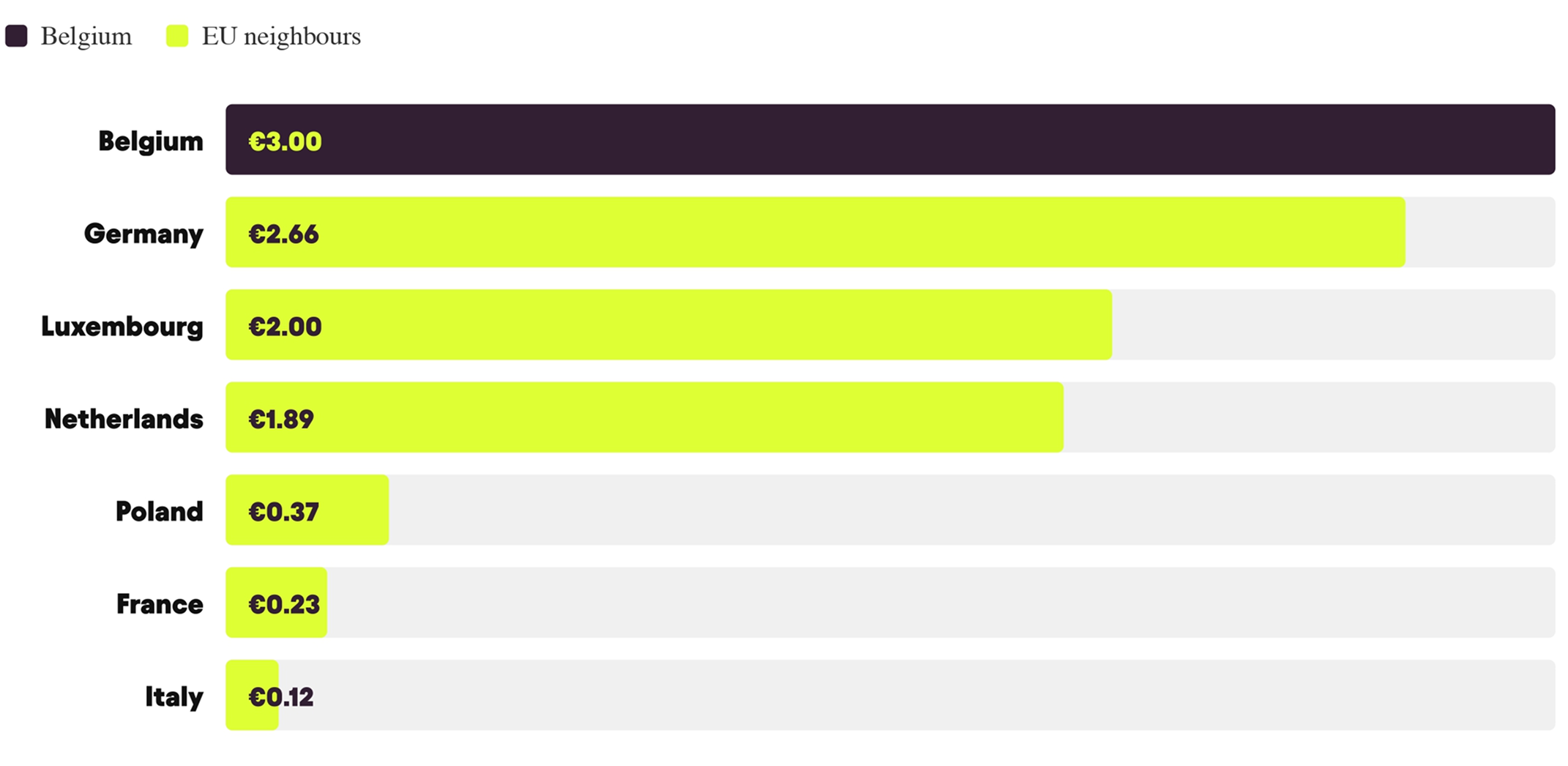
EU-wide, mobile broadband prices fell by up to 14% between 2023 and 2024. Belgium has improved, but the gap with the lowest-cost EU markets remains wide.
How to Check If You Are Overpaying
Divide your monthly plan cost by your data allowance to find your effective per-GB price
Compare that figure against current MVNO offerings in Belgium
Check whether you regularly use your full data allowance each month
Check whether your introductory rate has already expired
Consider whether your bundle includes services you do not actually use
If your per-GB cost is above €2 and you are not using most of your bundle, there is a strong case for reviewing your options.
What a Fairer Model Looks Like
Wholesale data costs are falling, regulated caps are declining year on year, and a new kind of operator is being built on a fundamentally different logic. One that starts from a simple premise: telecom should work for you, not against you.
That is what Firsty is. Rather than locking you into expensive bundles with promotional periods that quietly expire, Firsty is a telecom operator that is structurally on the customer's side, with transparent pricing, no contracts, and no hidden fees anywhere in the small print.
The industry has spent decades building walls around connectivity: GB limits, country limits, operator lock-in. There are operators out there already working to change that, and Firsty is one of them. Stay tuned for more news closer to home.
Firsty. You're free to connect.
FAQ
Why is mobile data so expensive in Belgium compared to France or Italy?
Belgium has a concentrated mobile market with limited direct competition, and bundle packaging makes it difficult to compare the real per-GB cost across providers. In France and Italy, aggressive competition has driven prices to a fraction of what Belgian consumers pay.
How do I calculate my real cost per GB?
Divide your monthly plan price by the data allowance. A €16.99 plan with 5 GB works out to €3.40 per GB. A €13 plan with 20 GB works out to €0.65 per GB, often on the exact same network.
What is the cheapest way to get mobile data in Belgium?
MVNO operators like Scarlet run on the same infrastructure as the major networks at substantially lower per-GB rates. If you are currently on a major operator's entry-level plan, the savings from switching can be significant.
Why do Belgian mobile plan prices go up after the first year?
Most operators offer promotional rates for the first 12 months. When that period ends, the plan reverts to its standard price, often €8 to €10 higher per month. Many subscribers absorb the increase rather than go through the effort of switching.
What is the EU wholesale data roaming cap?
The regulated maximum price EU operators can charge each other for carrying roaming data. It currently stands at €1.30 per GB in 2025, falling to €1 per GB by 2027, and gives a useful benchmark for what data actually costs at the infrastructure level.
Is mobile data pricing in Belgium getting better
Gradually. EU-wide prices fell by up to 14% between 2023 and 2024, and Belgium has seen some improvement. The entry of new competitors and continued MVNO growth are the most likely drivers of further change.